Why One Spouse Shuts Down and the Other Won’t Stop Talking

The Nervous System Behind Marriage Conflict
Monday morning hits, and somehow you feel more exhausted than you did Friday afternoon.
But this time it’s not about the never-ending work deadlines, the shuffling of kids back and forth to their events, or the “emergency” calls from your in-laws. It’s the silence between you and your partner—the kind of silence that feels louder than any argument.
You know the kind: you’re in the kitchen, grabbing your coffee, packing the kid’s lunch, and there is zero engagement, or maybe a yes/no answer at best.
Here we go…again?!
The silence is getting more and more predictable. You attempt to say something, but it always seems to pivot into things being your fault. So you choose silence too, because it seems to be the safer alternative.
But this isn’t what you signed up for. When you were dating, you promised each other that things would be different. Your love is deeper and stronger than any relationship you've known. You promised you would talk things out.
So how did we get here?
It’s Not Just a Communication Problem
Many couples end up on our couch asking this very question. But very few have been exposed to the science of our nervous system.
Wait, I thought this was about communication issues.
Yes, it is. You can learn every communication skill in the world, but if your nervous system is jacked up, you won’t be able to use any of them.
When Your Nervous System Takes Over
One of the first things I learned in counseling was flooding.
Flooding, defined by the Gottman Institute as a state of being physically and psychologically overwhelmed during conflict, occurs when a partner's negativity causes your nervous system to go into overdrive. It makes productive communication impossible, often triggering “fight, flight, or freeze” responses.
We all know what it’s like to feel overwhelmed during conflict, but did you know we typically exhibit one of three immediate reactions - fight, flight, or freeze?
Our Tiger & Turtle Pattern
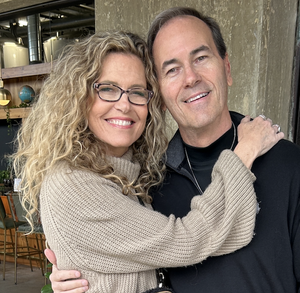
Early on in our marriage, when Russ and I experienced tension, my immediate reaction was to shut down and not talk to him for two or three days. Russ’s reaction was to become verbally aggressive and try to fix the issue at hand. He learned very quickly that the more he chased after me with words, the longer I would hunker down in my turtle shell.
Little did we know that we were playing out the Four Horsemen of the Apocalypse in our marriage -Criticism, Defensiveness, Contempt, and Stonewalling.
Now here’s what shocked me. I wasn’t saying anything mean in our tense conversations; I was just going away. Wasn’t that the nicer option? Seeing stonewalling on this list of destructive behaviors in marriage shocked me.
How am I damaging things?
You see, stonewalling, or shutting down, creates a lot of anxiety for your partner. They don’t know when we’re coming back around, and they don’t get any resolution to the tension. For us turtles, shutting down is a survival skill, and for many of us, it was most likely modeled in our childhood.
I remember as a child watching my mom get her feelings hurt and shutting down by going to her bedroom. I swore that would not be me when I got older.
But guess what? After our first real tense discussion, I shut down and went to my bedroom. I barely spoke to Russ, and when I did, it was only one-word answers. By day two, Russ asked how long this was going to last, and I thought to myself, “Keep talking to me, and I’ll add another day.”
Oh boy…we had a lot to learn.
Russ, on the other hand, couldn’t stop talking during our tension. He needed to resolve the situation right away. Asking him to calm down or pause is like asking a football player with all their intense energy to stop in the middle of the play and have a calm, productive conversation.
Not likely!
One spouse moves toward conflict to find a resolution. The other pulls away to find safety.
Counseling taught us that we both had a role in not being emotionally safe for each other. The antidote to my turtle-like behavior was committing to coming back to the conversation.
For us turtles, shutting down can become habitual. But there’s another reason why we flee or freeze, words escape us. For years, Russ thought I was purposely not talking to him in tense moments, but it was because no words came to mind.
When Your Brain Literally Loses Words
For some people under high emotional stress, activity decreases in parts of the brain involved in language, especially Broca’s area (speech production) and Wernicke’s area (language processing). This is why people say things like, “I literally couldn’t think of anything to say.” The mind can feel blank, even though emotions are intense.
This is often called an “amygdala hijack.” A person can literally lose access to the brain regions needed to form words and articulate thoughts.
Russ has the opposite reaction. He can become verbally aggressive because safety for him means discussing the situation immediately and bringing it to a resolution. The longer I hunker down in my turtle shell, the more his anxiety rises.
Does any of this sound familiar? If so, what’s the solution?
Breaking the Cycle
First, we had to own that neither of us was emotionally safe for the other. Russ needed to listen and ask more questions, and I needed to commit to coming back to the conversation and staying engaged.
What changed our marriage wasn’t learning how to argue better; it was learning how to regulate our nervous systems and create emotional safety for each other. Once we understood why we reacted the way we did, the tension between us began to make sense.
When couples begin to understand what’s happening beneath the surface, they can finally start changing the pattern. What once felt like an endless cycle of tension can begin to turn into moments of understanding instead.
If this pattern sounds familiar, take a moment to talk with your spouse about it. Ask yourselves: When tension rises, do we fight, flee, or freeze? Awareness is often the first step toward change.
And if you want guidance on learning how to navigate these moments together, we’d love to walk alongside you.
To book a session, visit intentionalmarriages.net and click ‘BOOK.’